
How to solve a 2x2 Rubik's Cube
Updated 2026-11-28 · by the Magic Cube team
A 2x2 has no centers and no edges, only eight corners. That makes it the easiest cube to learn: three steps, and you only need to memorize two algorithms. If you can already solve a 3x3 with the beginner method, you know most of this already.
You don’t need to read notation fluently to follow along, but it helps to know the letters: R is the right face, U the top, F the front, and a ' means turn that face the other way. The notation guide has a picture for every move.
Step 1. The white layer
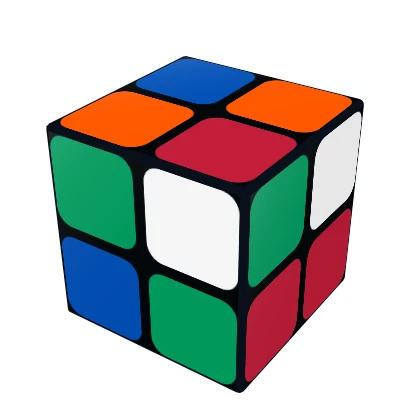
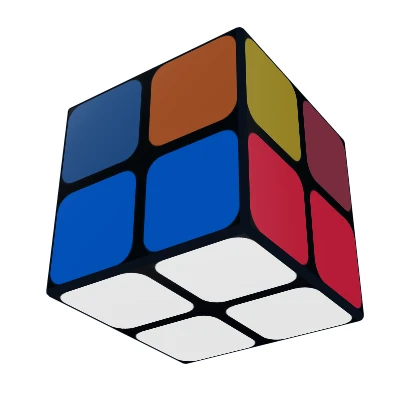
Pick any white corner and hold the cube so that corner is in the bottom layer, white facing down. From now on white stays on the bottom.
The whole step uses one sequence, the 4-move sequence R U R' U'. Do it a few times until your hand does it without thinking:
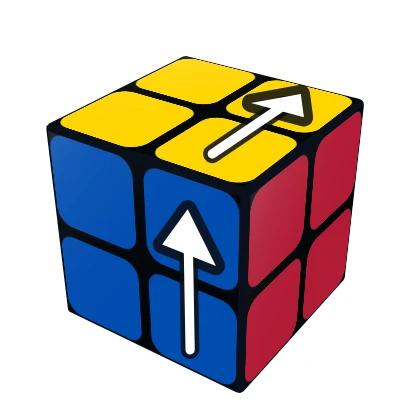
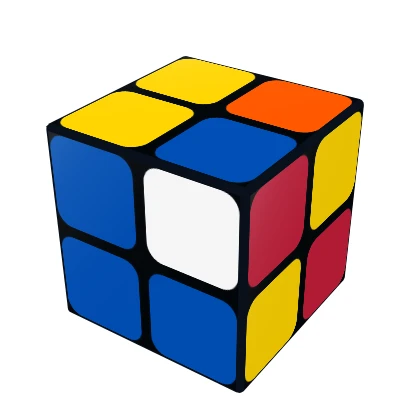
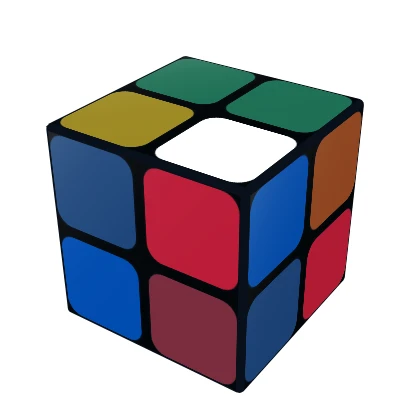
Now look in the top layer for a white corner that shares a color with the white corner already on the bottom. Its place is next to that bottom corner, on the side of the shared color. Turn the top until the corner sits right above its place, then hold the cube so the place is at the front right.
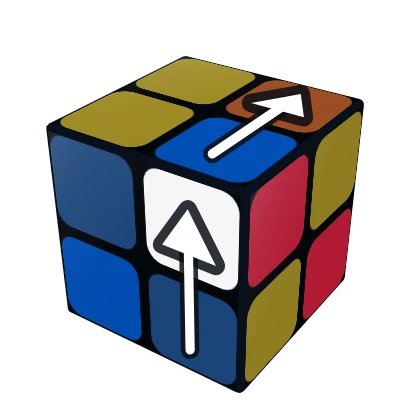
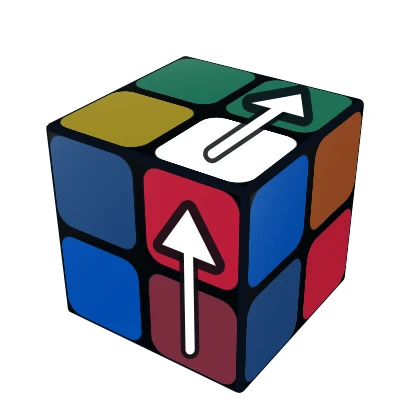
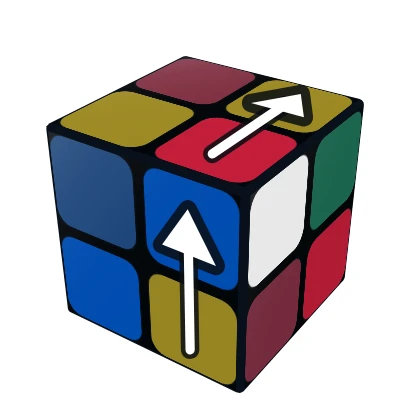
Repeat R U R' U' until the corner drops in with white facing down. How many times depends on where the white sticker points:
| White sticker faces | Repeat R U R' U' |
|---|---|
| right | 1 time |
| up | 3 times |
| front | 5 times |
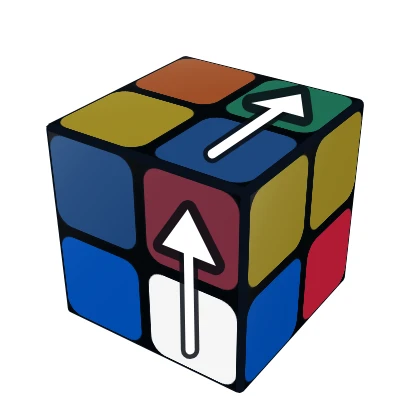
Do the same for the other white corners. If a white corner is already in the bottom layer but in the wrong spot or twisted, hold it at the front right and do R U R' U' once. That lifts it into the top layer, and you can place it like any other corner.
Step 2. The yellow top
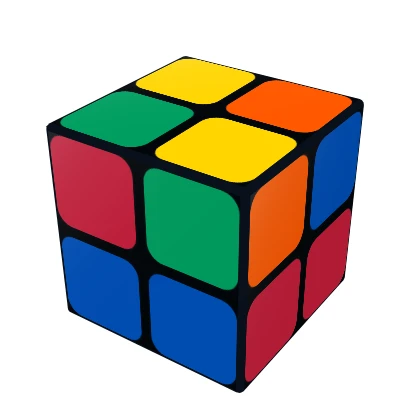
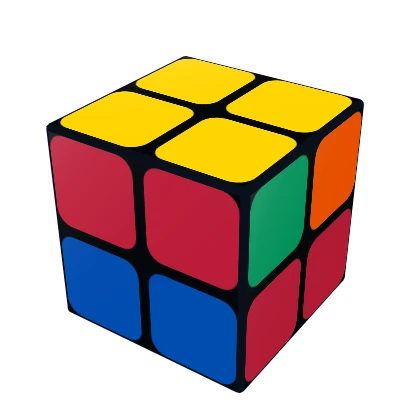
Turn the cube so yellow is on top (white stays on the bottom). You need one algorithm here. Break it in two halves so it’s easier to remember:
R U R' U·R U2 R'
Count the yellow stickers that face up and hold the cube for your case:
- One yellow on top: turn the top so that yellow corner is at the front left, then do the algorithm.
- No yellow on top, or two: turn the top so the front-left corner has its yellow sticker facing left, then do the algorithm.
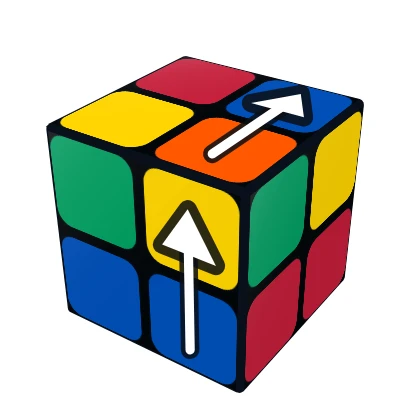
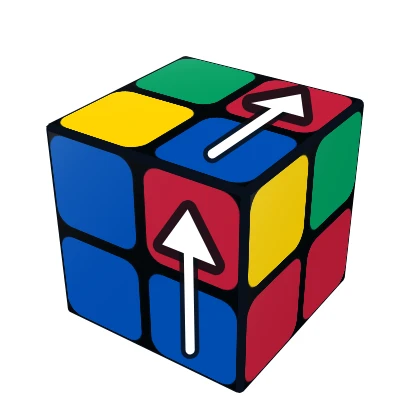
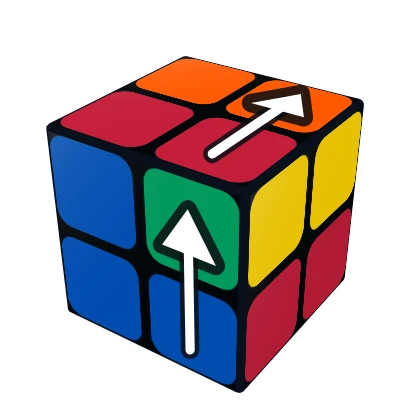
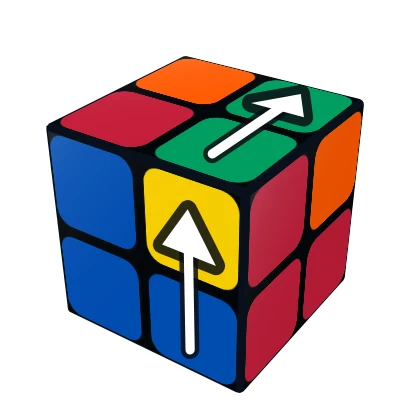
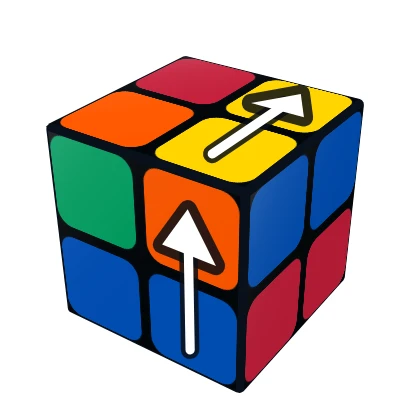
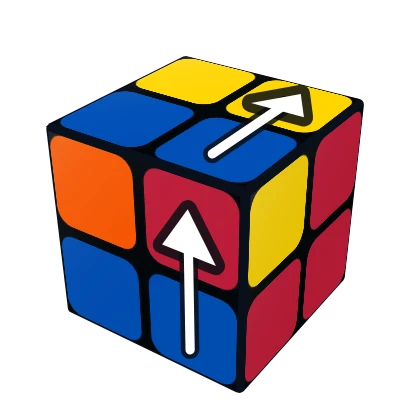
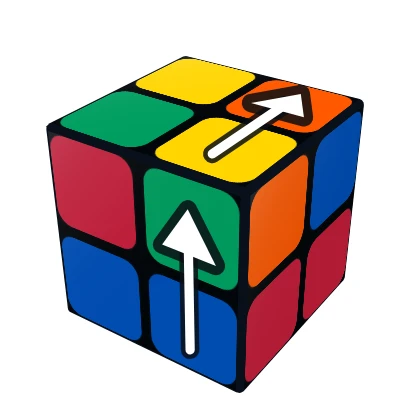
After the algorithm, look at the top again. It’s either solved or you have a new case, so hold the cube for that case and repeat. You never need more than three tries.
Step 3. The top corners
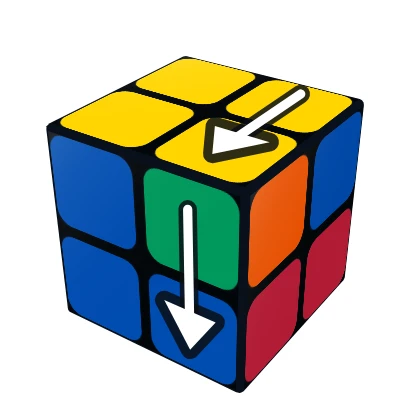
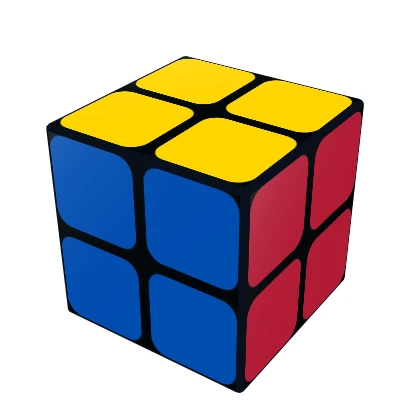
The top is yellow, but the corners may be in the wrong places. Look at the sides of the top layer for a matching pair: two corners next to each other with the same color on the same side.
- All four sides match: just turn the top until the cube is solved.
- One matching pair: turn the top so the pair is at the back, do the algorithm below, then turn the top until it’s solved.
- No matching pair: do the algorithm once with the cube held any way. You’ll get a matching pair, then solve it as above.
R' F R' B2·R F' R' B2 R2
When it doesn’t work
If everything is solved except one twisted corner, or the steps above keep going round in circles, the cube was most likely taken apart and put back together wrong (it happens when a corner pops out). No algorithm fixes that. Twist that corner back by hand or take the cube apart and reassemble it solved.
How many moves does a 2x2 need?
Every 2x2 position can be solved in 11 moves or fewer. This beginner method takes more, about 60 moves on average, because it solves the cube in easy pieces. Once it feels easy, people move on to methods like Ortega or CLL, which solve the last layer in fewer looks.
If you just want your scramble solved, the app finds the shortest possible solution for any 2x2, 9 moves on average, and shows it move by move.
Next steps
- Learn the 3x3 beginner method. You already know one of its algorithms:
R U R' U R U2 R'from step 2 comes back in step 5 on the 3x3. - Learn the notation properly, then the CFOP method when you want to get faster.