
How to solve a Rubik's Cube with the beginner method
Updated 2026-11-28 · by the Magic Cube team
The beginner method solves a 3x3 Rubik’s Cube layer by layer in 7 steps: a white cross, the white corners, the middle layer, then four short steps for the yellow side. Most of the work is done by one 4-move sequence, R U R' U'. On top of it you learn two middle-layer algorithms built from it and three short ones for the last layer, and with practice a solve takes 2 to 4 minutes.
How to read the moves
Each letter is a face, turned a quarter turn clockwise as you look at that face: R right, L left, U up (top), D down (bottom), F front, B back. A ' means counterclockwise (R'), a 2 means a half turn (U2). y turns the whole cube like a U move, so the right side comes to the front; y’ is the other way. The notation guide has a picture for every move.
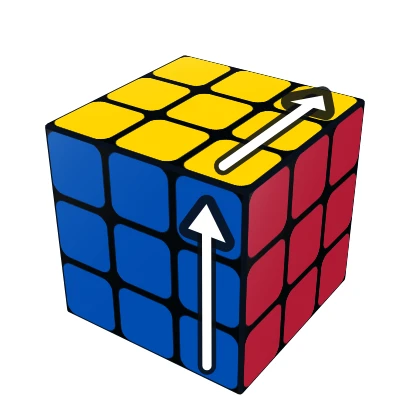
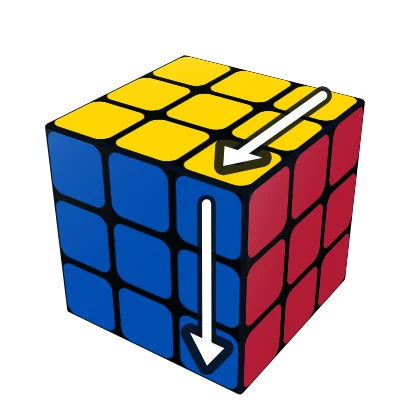
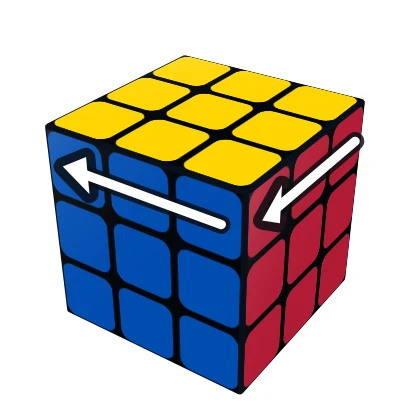
Everything you need to memorize fits in one table:
| Step | Algorithm |
|---|---|
| 1. White cross | none, you solve it by looking |
| 2. First layer | R U R' U' (left hand: L' U' L U) |
| 3. Second layer | U R U R' U' y L' U' L U or its mirror U' L' U' L U y' R U R' U' |
| 4. Top cross | F R U R' U' F' |
| 5. Match cross colors | R U R' U R U2 R' |
| 6. Put corners in place | U R U' L' U R' U' L |
| 7. Twist the last corners | R U R' U' again |
Step 1. White cross
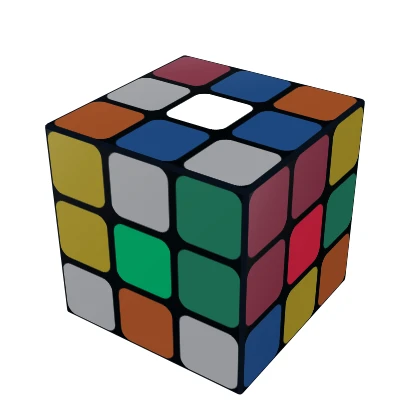
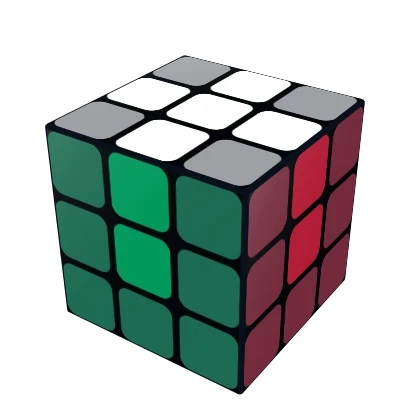
Hold the cube with the white center on top. The goal is four white edges around it, and each edge’s other color must match the center on its side. A plus sign that doesn’t match the sides is not a finished cross.
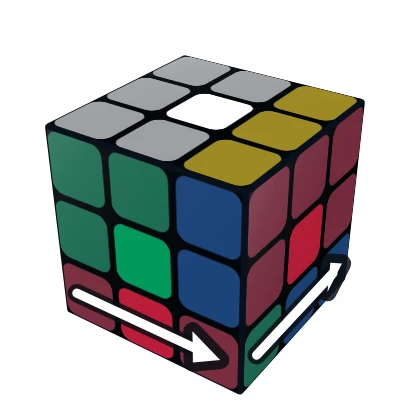
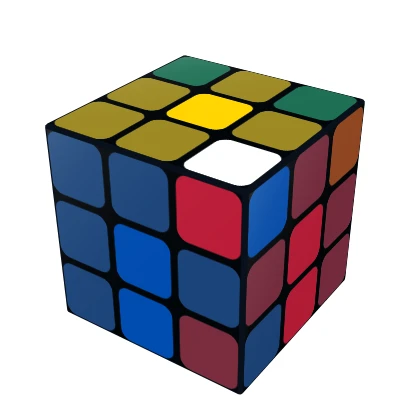
White edge in the bottom layer. Look at the edge’s other color. Turn the bottom layer until the edge sits right under the center of that color, then turn that face twice to bring the edge up to the white center. In the picture the edge goes under the red center with D, then R2 brings it up:
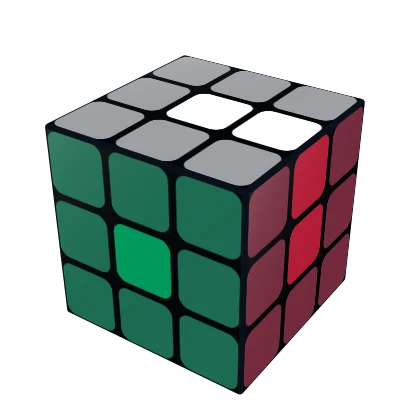
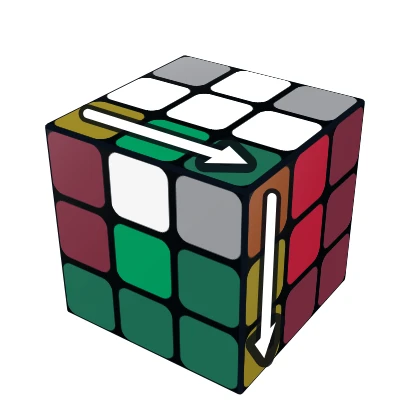
White edge on top but flipped (white faces the side, not up). Hold it at the front and do F U' R U:
White edge on top in the wrong place. Turn that face twice to drop it into the bottom layer, then solve it like any bottom edge.
White edge in the middle layer. Hold it at the front right and do R' D' R to move it into the bottom layer, then solve it from there:
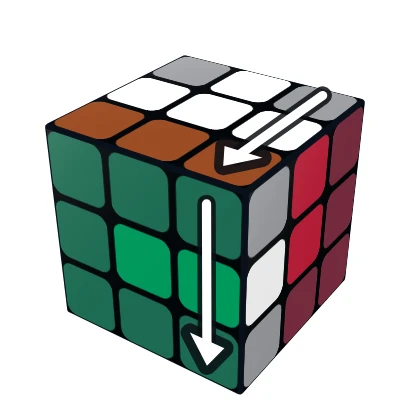
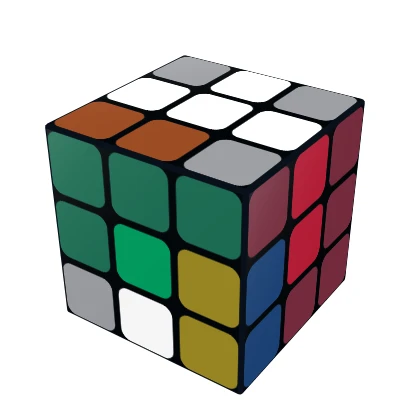
Do this for all four white edges. The most common mistake here is matching only the white sticker: always look at both colors of the edge.
Step 2. First layer
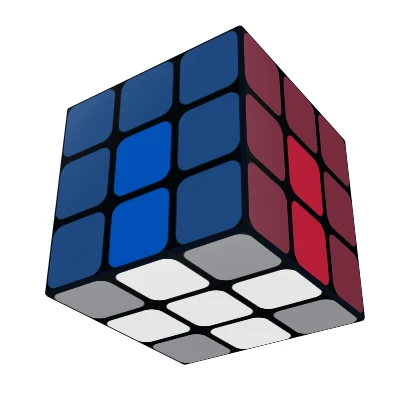
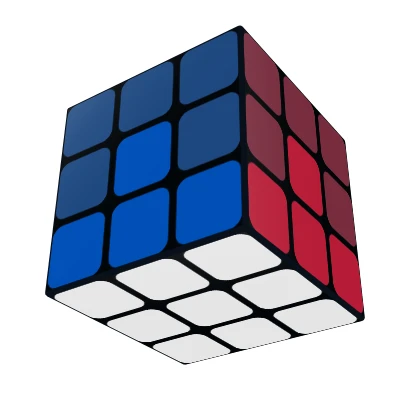
Turn the cube over so the white cross is on the bottom. It stays there for the rest of the solve.
Before you go on, learn the 4-move sequence until your hand does it without thinking. You’ll use it in almost every step:
R U R' U'
There is a left-hand version too, L' U' L U, which is the same thing mirrored.
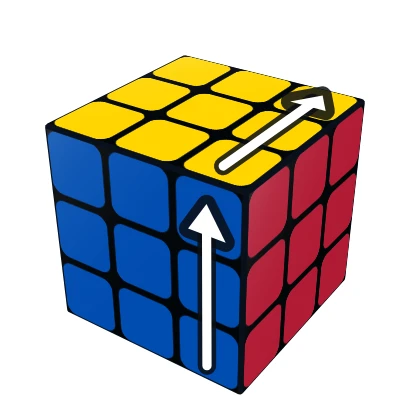
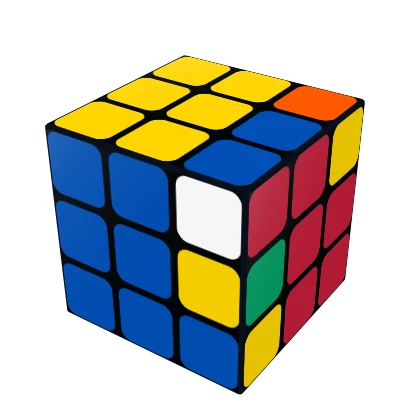
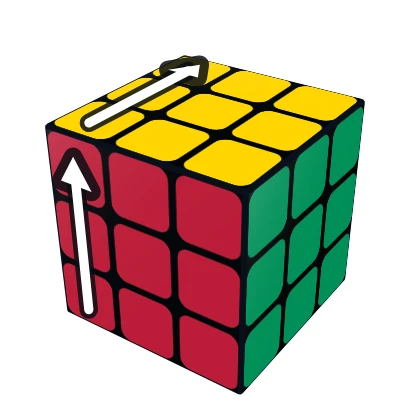
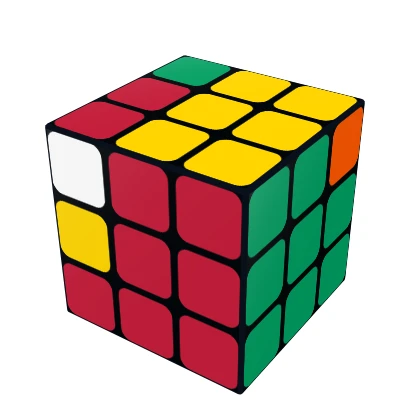
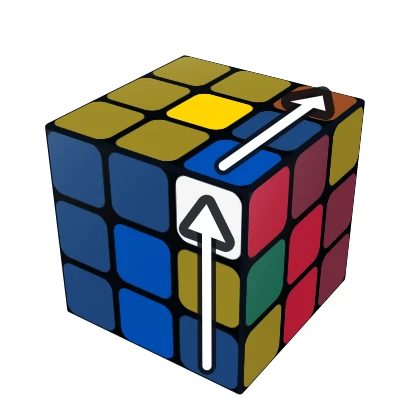
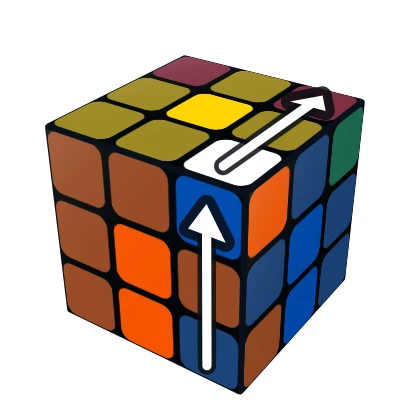
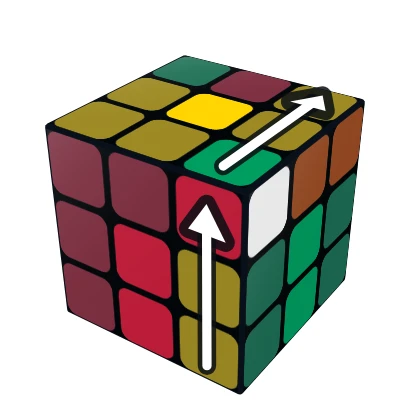
Now find a corner in the top layer with white on it. Turn the top until the corner sits between the two centers that match its other two colors. Hold the cube so that corner is at the front right, above its spot, and repeat R U R' U' until the corner drops in with white facing down. How many times depends on where the white sticker points:
| White sticker faces | Repeat R U R' U' |
|---|---|
| right | 1 time |
| up | 3 times |
| front | 5 times |
If the corner is at the front left instead, you can use the left 4-moves the same way.
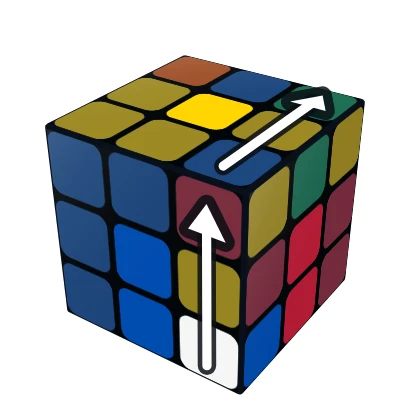
Repeat until all four white corners are solved. If a white corner is already in the bottom layer but in the wrong spot or twisted, hold it at the front right and do R U R' U' once. That lifts it into the top layer, and you place it like any other corner.
Step 3. Second layer
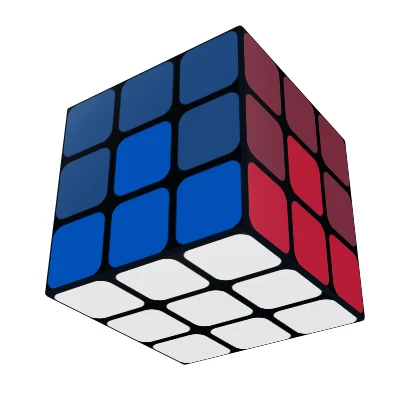
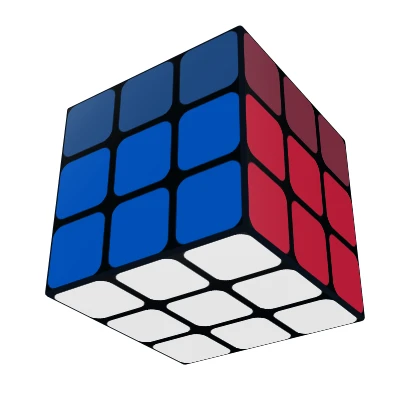
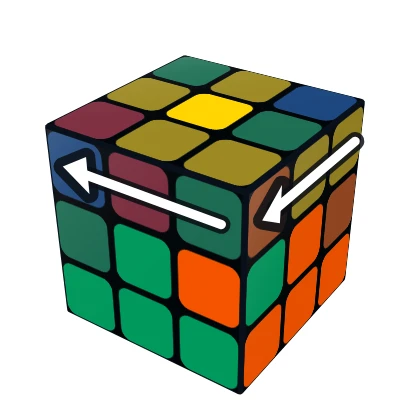
Now you put the four middle-layer edges in place. Find an edge in the top layer that has no yellow on it. Turn the top until the edge’s front color matches the center below it, so you see a vertical line of the same color on the front. Then look at the edge’s top color: it matches either the right center or the left center, and that tells you which way the edge goes.
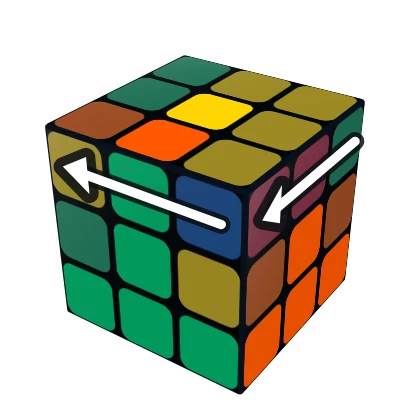
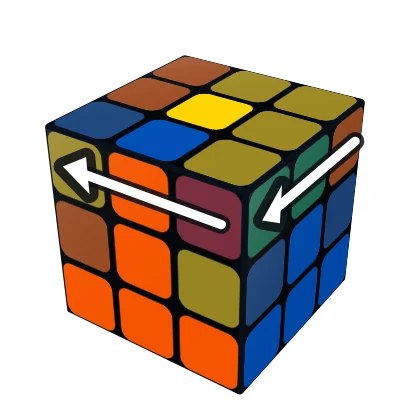
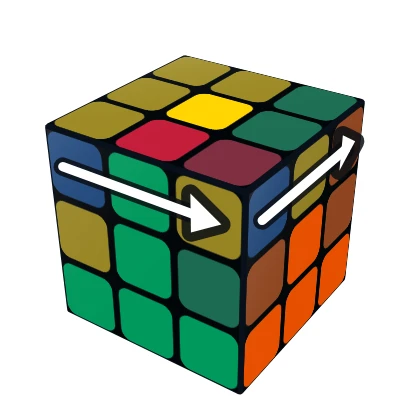
The edge goes to the right:
U R U R' U'·y L' U' L U
Turn the top away from the edge with your right hand (U), do the right 4-moves, turn the whole cube so the right side faces you (y), then do the left 4-moves.
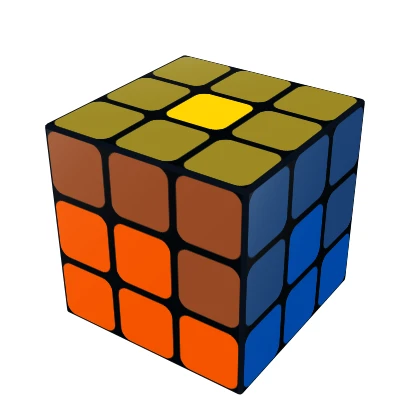
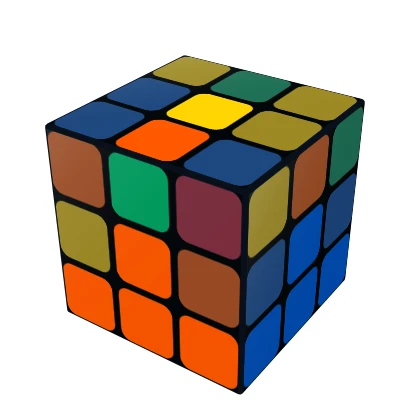
The edge goes to the left:
U' L' U' L U·y' R U R' U'
Turn the top with your left hand (U'), do the left 4-moves, turn the whole cube so the left side faces you (y'), then do the right 4-moves.
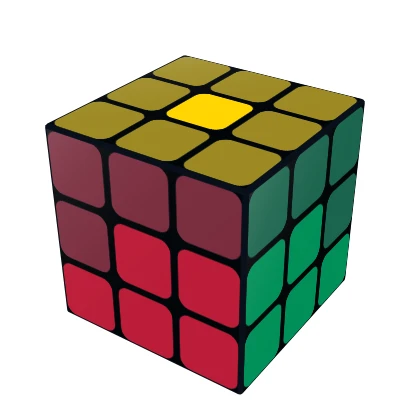
Repeat until all four middle edges are in. If an edge you need is stuck in the middle layer, in the wrong spot or flipped, do either algorithm with that spot at the front. Any top edge works as the one you insert. It pushes the stuck edge out into the top layer, and you solve it normally from there.
Step 4. Top cross
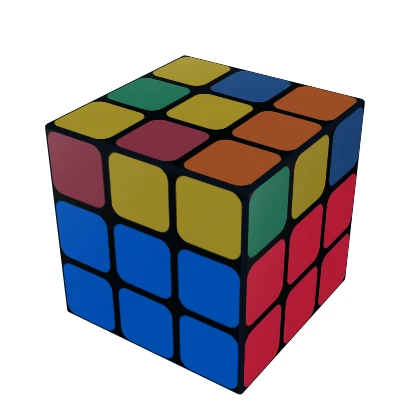
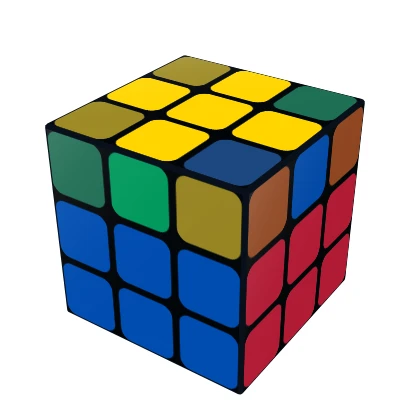
Yellow is on top now. Look only at the four edges of the top face and ignore the corners. You’ll see one of three shapes: a dot (no yellow edges up), an L (two yellow edges next to each other) or a line (two yellow edges across from each other).
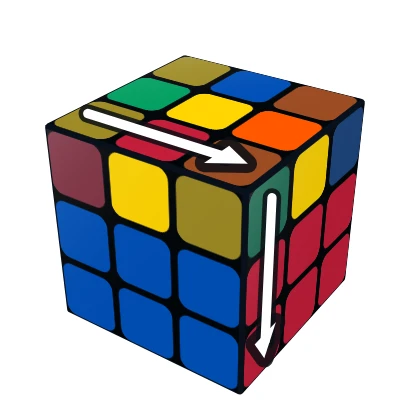
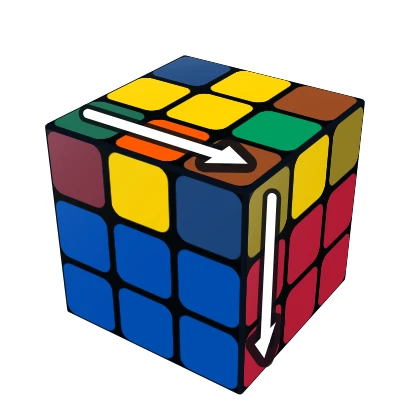
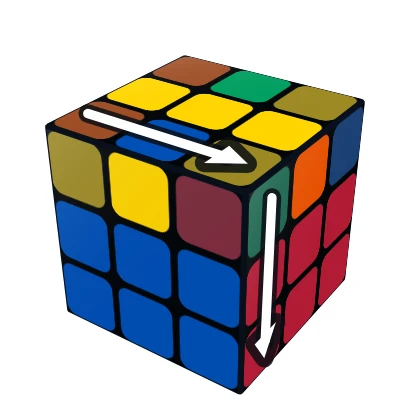
Hold the cube as in the pictures: the L with its yellow edges at the back and on the left, the line going from left to right. Then do:
F R U R' U' F'
That is the front clockwise, the 4-move sequence, then the front back again.
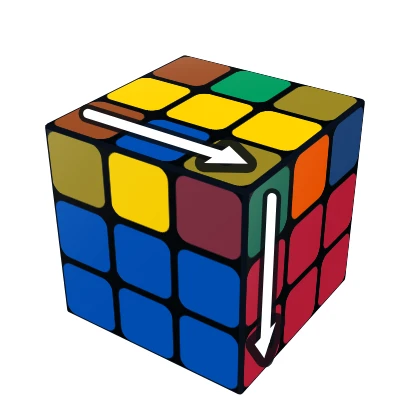
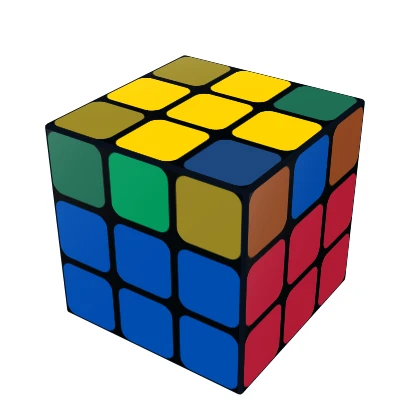
Each time you do it, you move one shape along: dot, then L, then line, then cross. After the dot, turn the top until the L points to the back left before you go again.
If you ever see one or three yellow edges on top, the cube can’t be solved as it is: an edge was flipped when the cube came apart or was put back together. Take it apart and reassemble it solved.
Step 5. Match cross colors
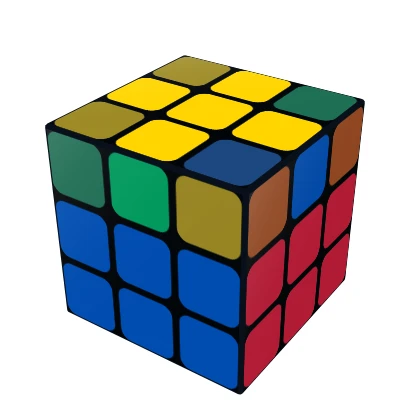
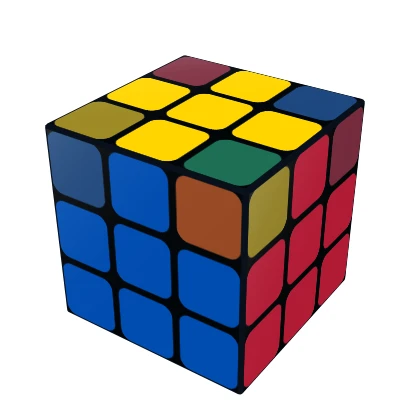
The cross is yellow, but its edges may not match the side centers. Turn the top until at least two of them match. If all four match, this step is done.
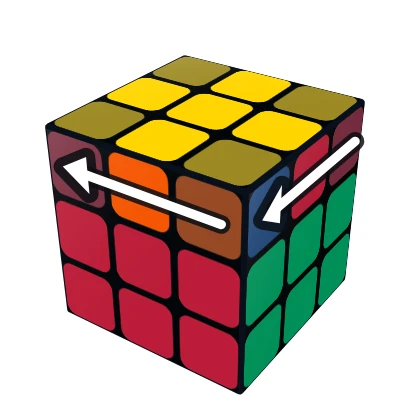
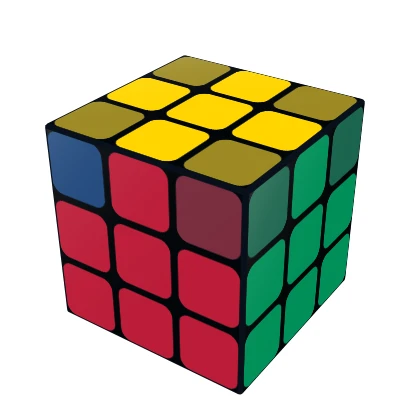
If the two matching edges are next to each other, hold them at the back and on the right. If they are across from each other, hold the cube any way. Then do:
R U R' U·R U2 R'
The first three moves are the start of the 4-move sequence. To remember the rest, watch the front-right pair of the bottom two layers: it leaves the bottom and comes back home at the end.
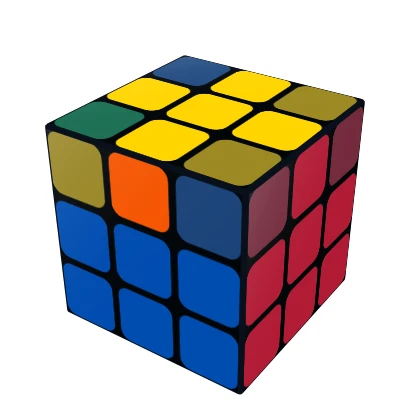
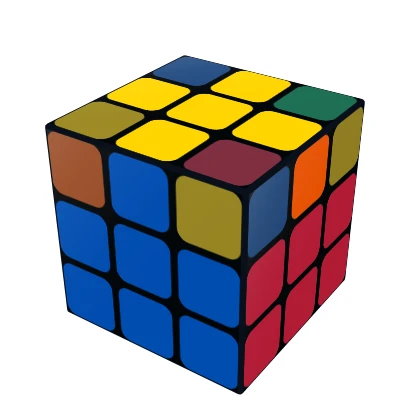
Now turn the top until all four match. If only two match, you started from the across case: hold the matching pair at the back and right and do the algorithm once more.
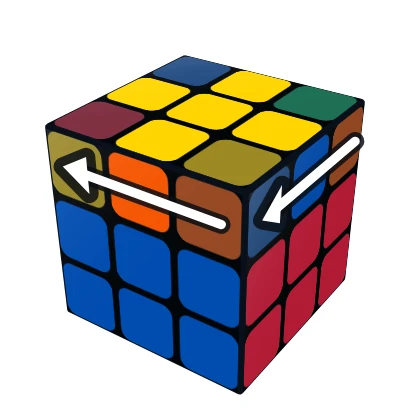
Step 6. Put corners in place
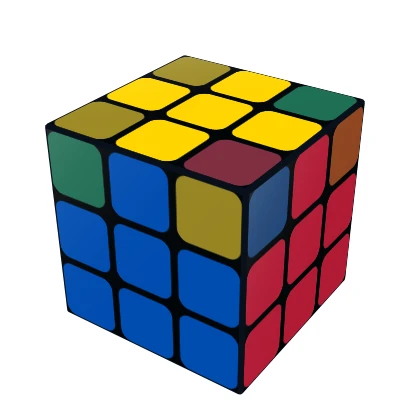
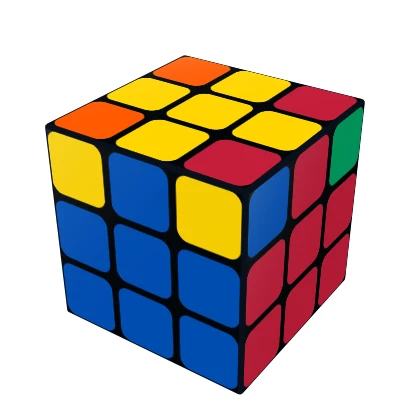
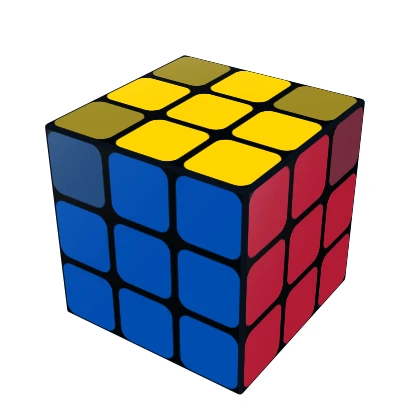
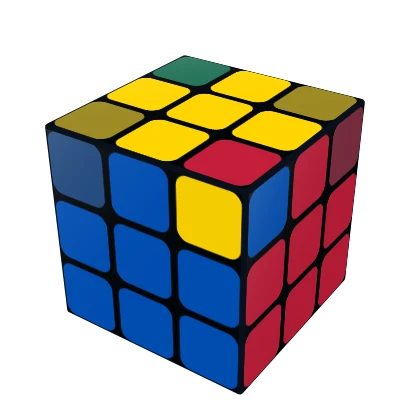
A corner is in the right place when its three colors match the three centers around it, even if it is twisted. These three are all in the right place:
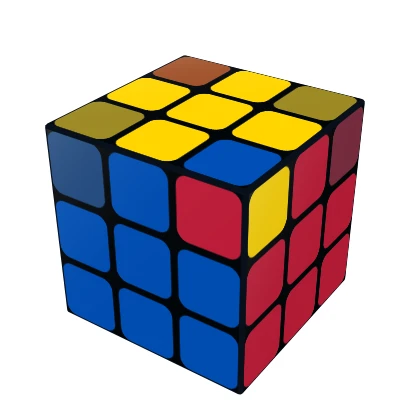
If one corner is in the right place, hold it at the front right. If none are, hold any corner there. Then do:
U R U' L'·U R' U' L
Top with the right hand, right side up, top with the left hand, left side up, then the same again going down. The front-right corner stays where it is and the other three swap round.
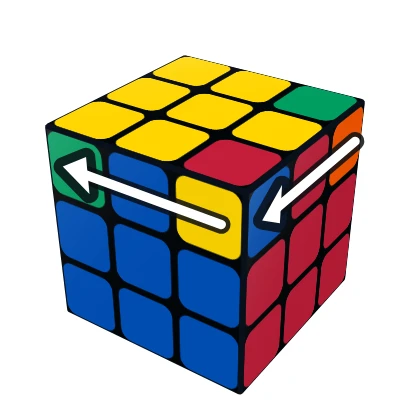
Check all four corners. If they aren’t all in place yet, hold the one that is at the front right and repeat. If exactly two corners are in place and the other two need to swap, the cube was reassembled wrong and can’t be solved.
Step 7. Twist the last corners
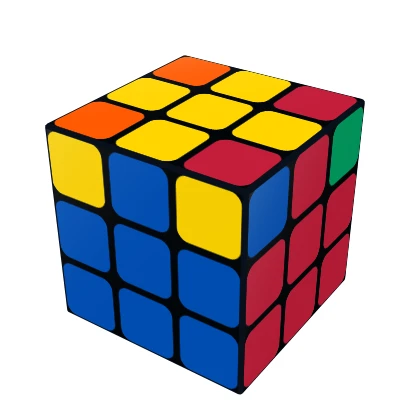
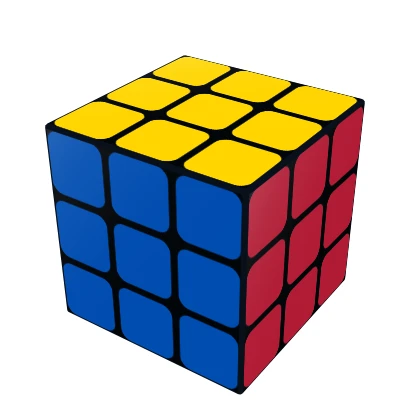
This step is where most people go wrong, so read all of it before you start.
Turn the cube over so yellow is on the bottom. The unsolved corners are now in the bottom layer. You may have two, three or four of them.
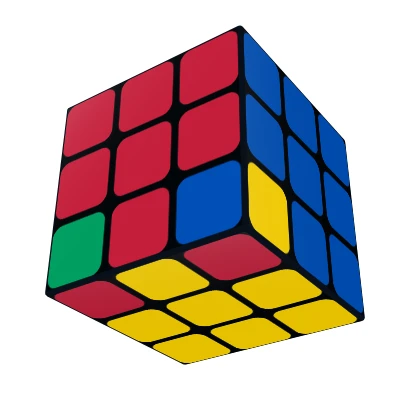
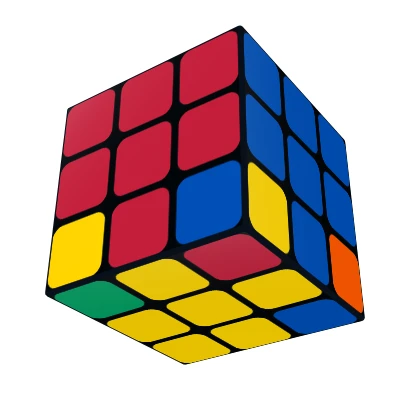
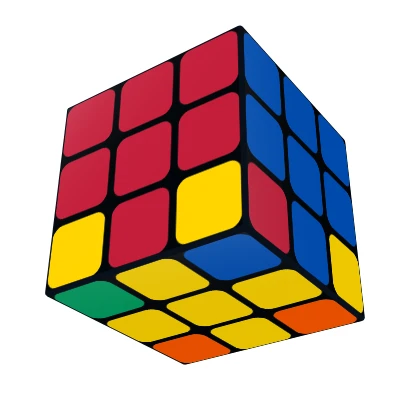
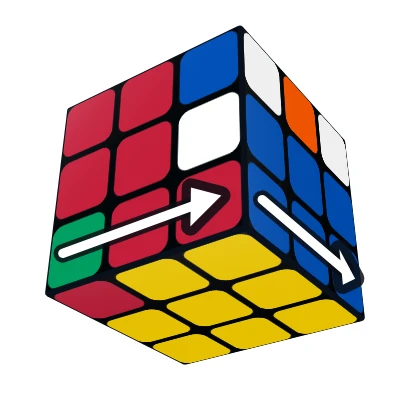
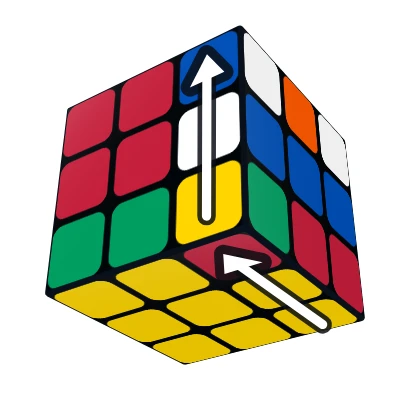
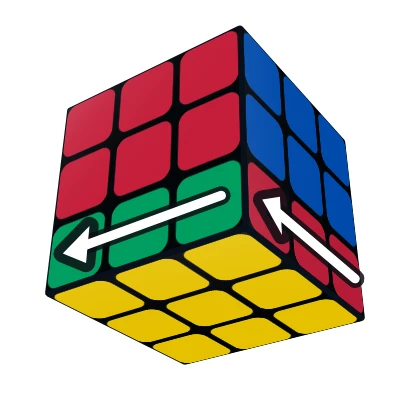
- Hold the cube so an unsolved corner is at the front right of the bottom layer.
- Repeat
R U R' U'until that corner has yellow facing down. That takes two or four times. The rest of the cube will look scrambled: don’t stop, it comes back. - Turn only the bottom layer (
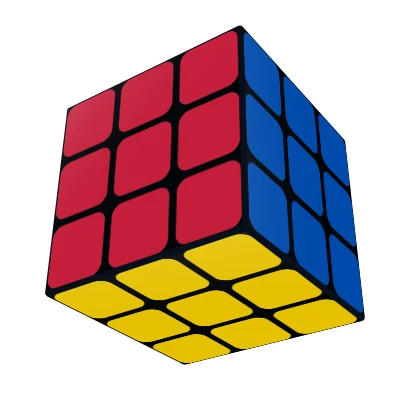
DorD') to bring the next unsolved corner to the front right. Repeat step 2. - When the last corner is twisted, turn the bottom layer until the cube is solved.
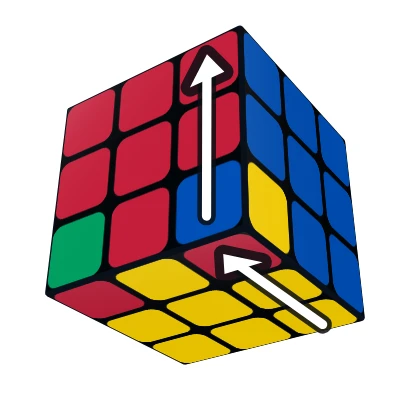
The two mistakes that break this step:
- Turning the whole cube to get the next corner. Keep the cube in the same hand position and turn only the bottom layer.
- Stopping in the middle of the 4-moves because the corner looks done after three moves. Always finish all four moves.
If one corner is twisted and everything else is solved, or you followed this step exactly and it still doesn’t work, the cube was reassembled wrong. Take it apart and put it back together solved.
How fast is the beginner method?
With practice you’ll solve the cube in 2 to 4 minutes. The method is easy to remember but long: a beginner solve takes about 150 moves on average. Every position can be solved in 20 moves or fewer (proven in 2010), and the app’s solver needs 19 moves on average for a random scramble, but nobody finds solutions like that by hand.
If you’re stuck on a scramble, scan your cube with the app: it shows the solution move by move in 3D, and the coach suggests your next move when you’re practicing these steps.
Next steps
- Make sure you know the notation, then learn CFOP, the method speedcubers use. Its 2-look OLL and PLL is the natural next step after this page.
- Try the 2x2: three steps, and you already know both of its tricks,
R U R' U'andR U R' U R U2 R'. - Ready for something bigger? The 4x4 is solved by turning it into a 3x3.