
Rubik's Cube notation
Updated 2026-11-28 · by the Magic Cube team
Cube notation writes each move as a letter for the face you turn: R (right), L (left), U (up), D (down), F (front) and B (back). A letter on its own means a quarter turn clockwise, as if you were looking straight at that face; ' means counterclockwise and 2 means a half turn. Everything else, wide moves, slices and whole-cube rotations, builds on those six letters.
The six faces
Hold the cube with one face towards you. That is the front, and it stays the front for the whole algorithm unless the algorithm itself turns the cube.
| Letter | Face | Clockwise means, seen from the front |
|---|---|---|
| R | right | the right side turns up, away from you |
| L | left | the left side turns down, towards you |
| U | up (top) | the top turns to the left |
| D | down (bottom) | the bottom turns to the right |
| F | front | the front turns clockwise, like a clock facing you |
| B | back | the back turns counterclockwise as you see it from the front |
R and L go in opposite directions, and so do U and D, and F and B, because “clockwise” is always judged from outside the face you turn. That is the most common source of confusion, and it’s why B looks backwards.
Prime and double moves
- R is a quarter turn clockwise.
- R’ (say “R prime”) is a quarter turn counterclockwise, the opposite of R.
- R2 is a half turn. Clockwise or counterclockwise ends in the same place, so
R2'andU2', which show up in some algorithms, are just a hint about which way is easier to turn.
Every face, with its clockwise, prime and double move:
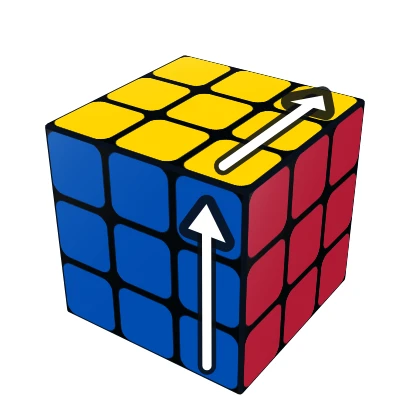
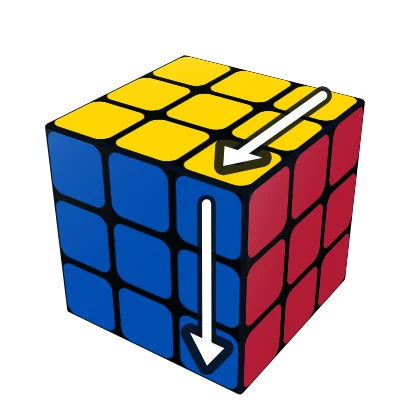
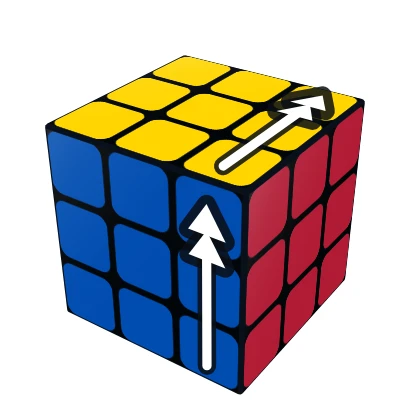
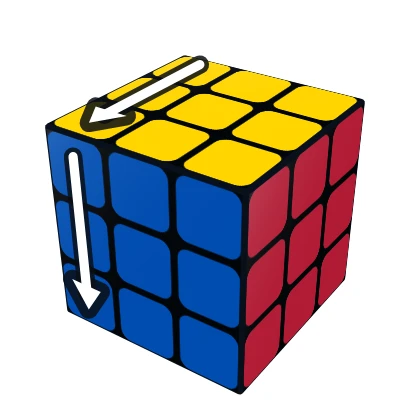
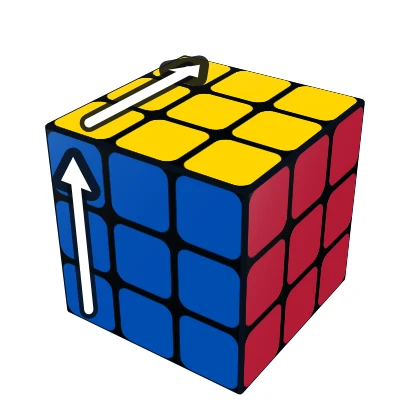
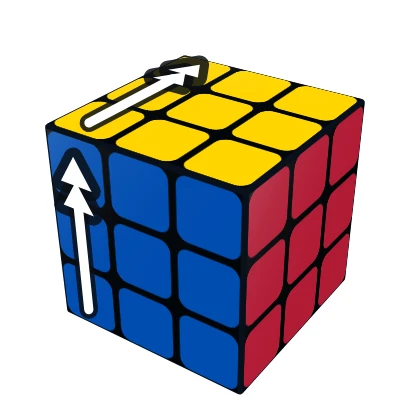
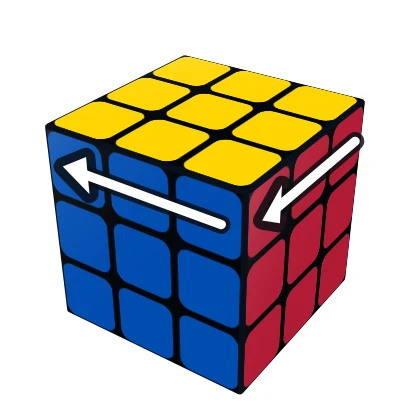
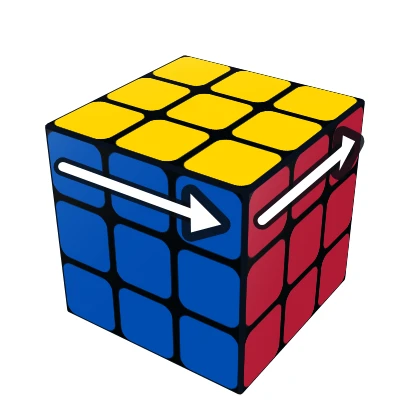
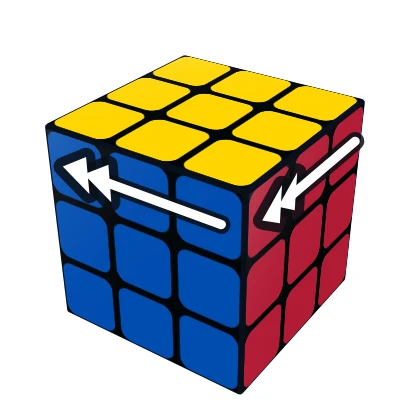
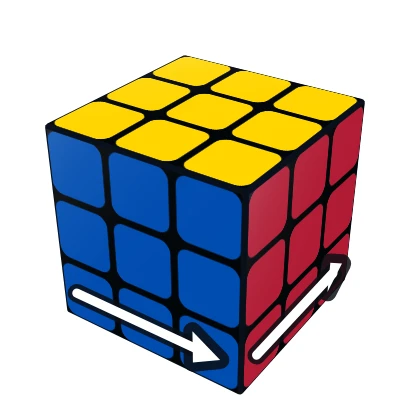
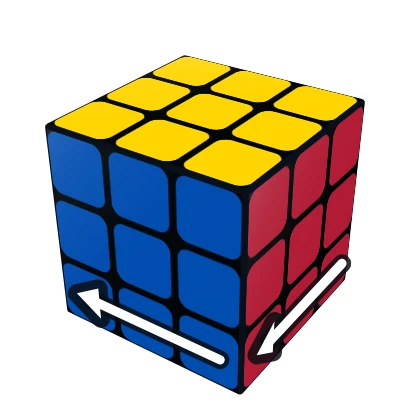
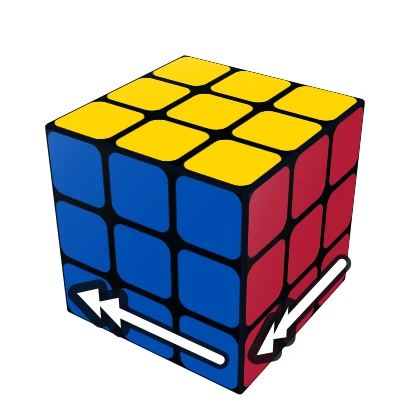
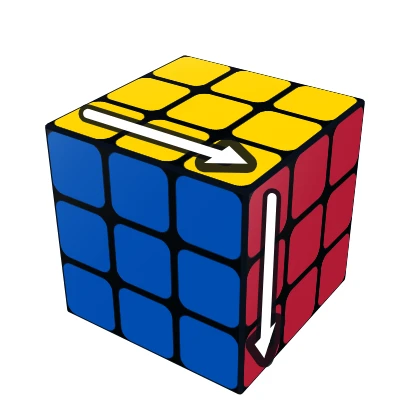
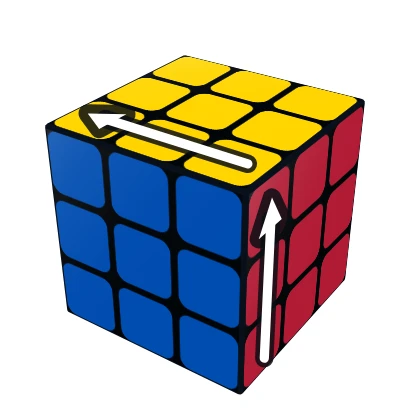
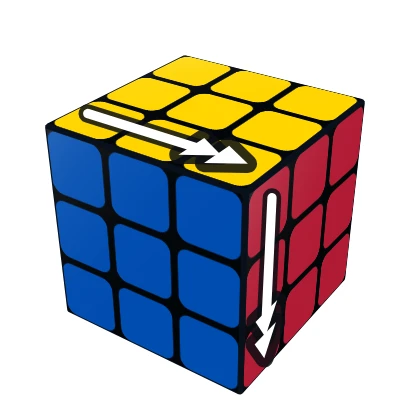
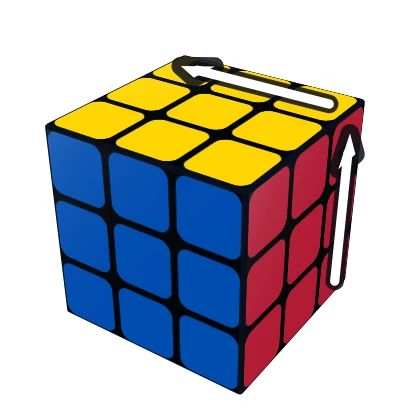
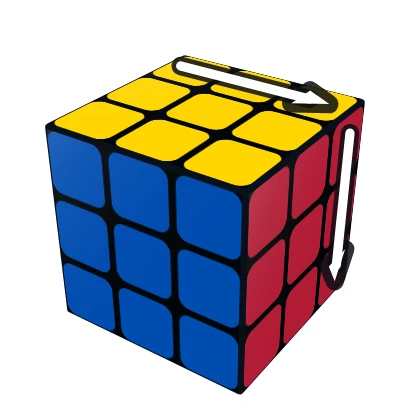
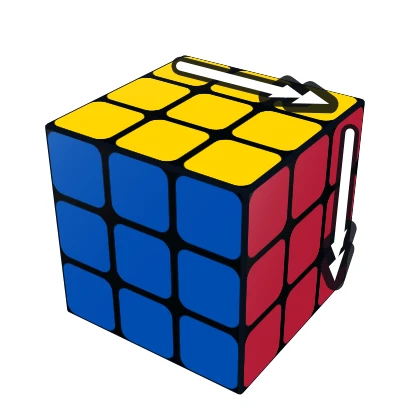
Algorithms are read left to right, one move at a time: R U R' U' means R, then U, then R’, then U’.
Wide moves: Rw and r
A wide move turns the outer layer together with the layer next to it.
- Rw turns the two right layers together, in the same direction as R. Many tables write it as a lowercase r. The same goes for Uw (u), Fw (f), Lw (l), Dw (d) and Bw (b).
- Rw’ and Rw2 work like R’ and R2.
- On a 3x3,
ris R and the middle layer turning together.
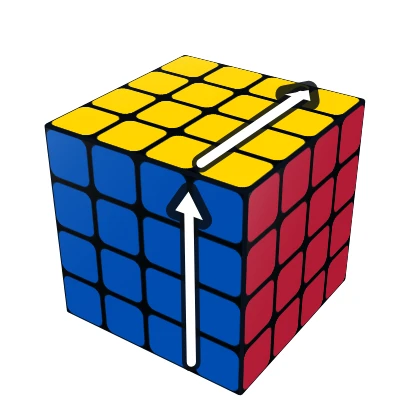
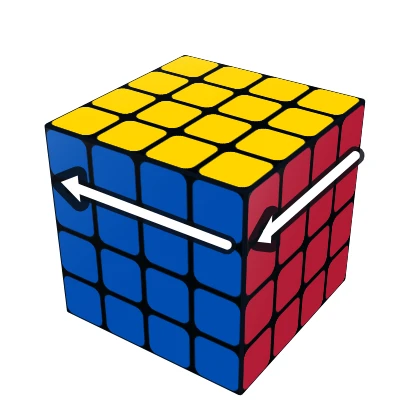
On bigger cubes a number in front says how many layers turn: 3Rw turns the three right layers together, 3Uw the three top layers. Without a number, Rw means two layers.
Inner slices: 2R, 3R
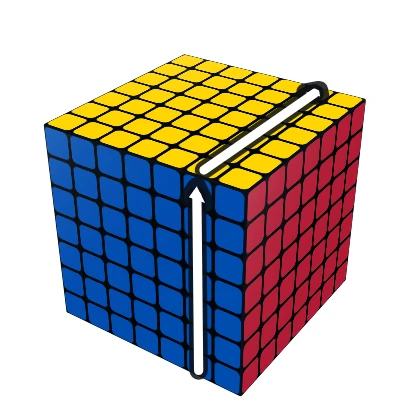
A number in front of a plain letter turns one inner layer only, counted from that face.
- 2R turns only the second layer from the right, in the same direction as R. 2L, 2U and the others work the same way.
- 3R turns only the third layer from the right, on a 6x6 or 7x7.
- 2-3Rw turns the second and third layers from the right together, which the 6x6 parity algorithms need.
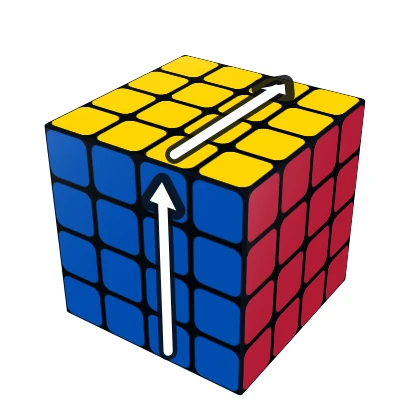
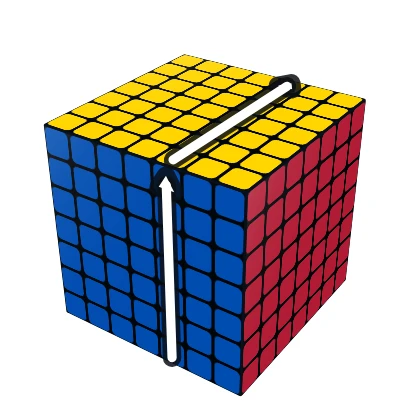
Read these carefully in 4x4 parity algorithms: 2R2 and Rw2 look alike but do different things, and the wrong one breaks the centers.
Middle layers: M, E, S
On a 3x3, three letters name the middle layers:
| Move | Layer | Turns like |
|---|---|---|
| M | between L and R | L |
| E | between U and D | D |
| S | between F and B | F |
M', E' and S' go the other way, M2 is a half turn. M moves show up in the H and Z perms of 2-look PLL, for example M2 U M2 U2 M2 U M2.
Rotations: x, y, z
Rotations turn the whole cube in your hands. No layer moves against another, you just hold the cube differently afterwards.
| Rotation | Turns the whole cube like |
|---|---|
| x | R |
| y | U |
| z | F |
x', y' and z' go the other way, x2, y2 and z2 are half turns. A y is the one you’ll meet first: it brings the right side to the front, as in the second-layer algorithm of the beginner method, U R U R' U' y L' U' L U. Some older tables write rotations in capitals, X, Y and Z.
Brackets and repeats
Brackets like ( ), [ ] and { } don’t change anything: they only group moves into chunks that are easier to remember. A number after a bracket means repeat it: (R U R' U')2 is R U R' U' done twice.
Next steps
- Use the notation on a real solve with the beginner method, or go straight to CFOP if you can already solve the cube.
- Wide and slice moves come up in the 4x4 and 5x5 guides.
- Back to the guide overview.